Guides · Animal poses
Bird in Flight From Below: Underwing Reference Photos
Reference photos of birds of prey in flight seen from below. The camera is under the bird, thirty-five to sixty degrees beneath it.
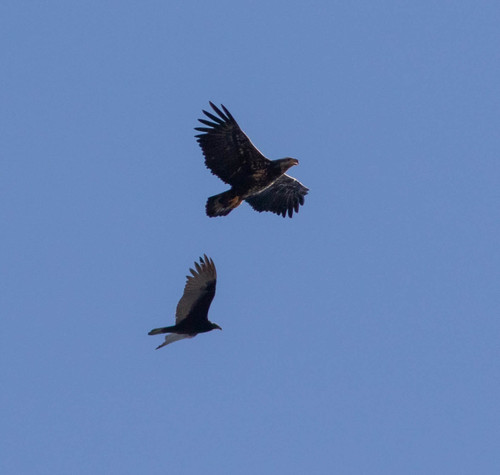
kirk gardner, CC BY 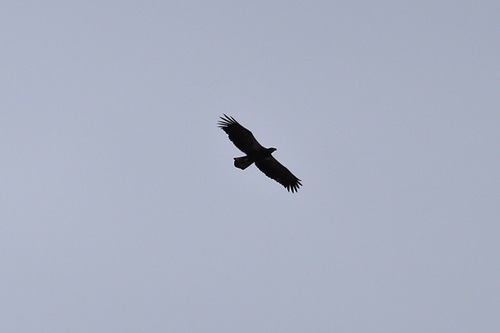
Laura Gaudette, CC BY 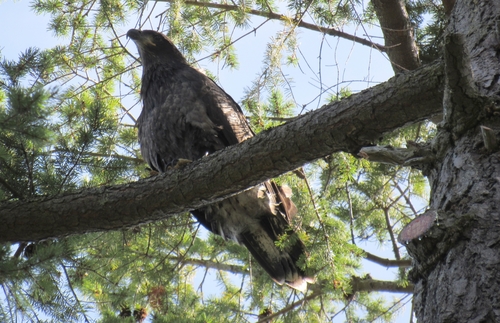
Brett/Tele, CC BY 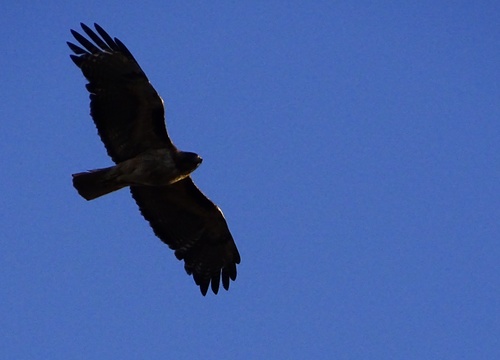
Jesse Rorabaugh, CC BY 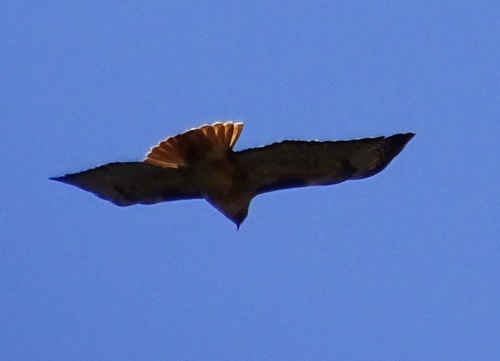
Jesse Rorabaugh, CC BY 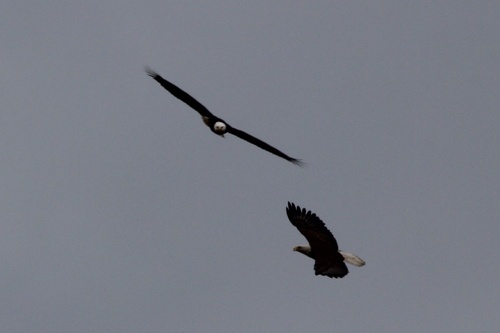
Justin Flint, CC BY 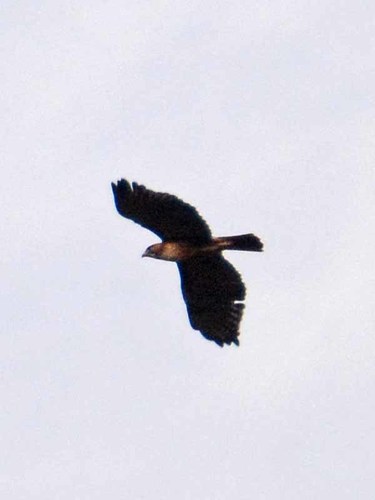
Gonzalo Zepeda Martínez, CC BY-SA 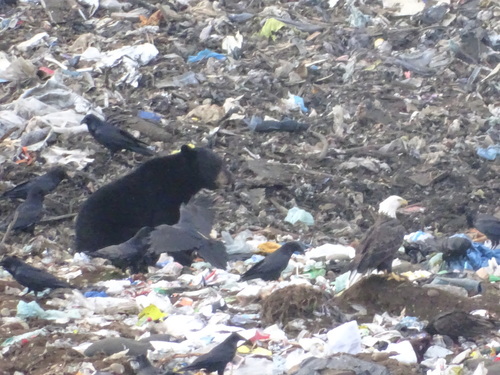
Reuven Martin, CC0 1.0 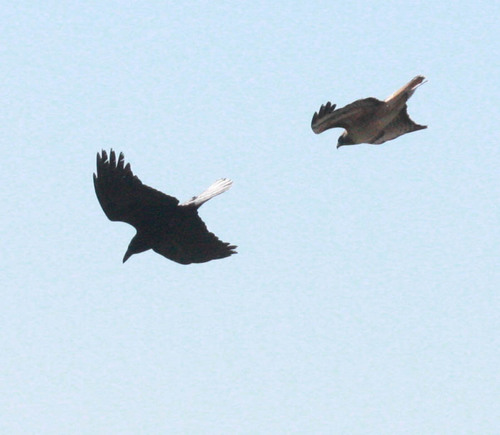
Scott Loarie, CC0 1.0 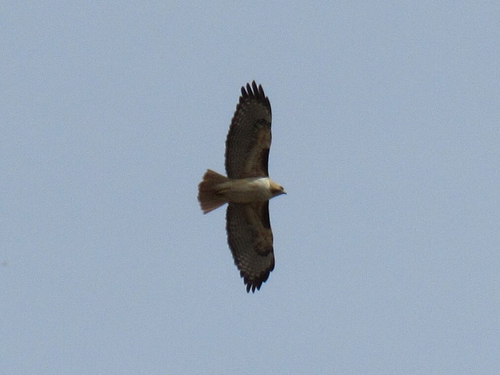
CK2AZ, CC BY 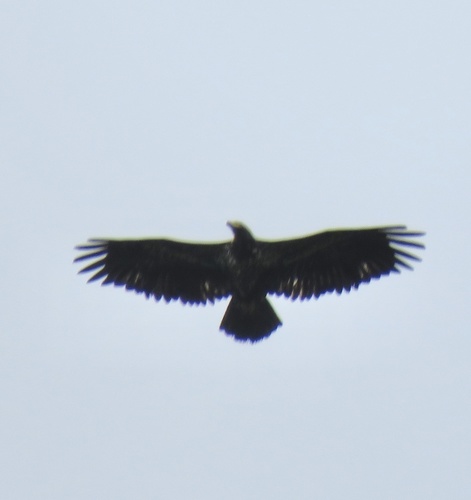
Erin Springinotic, CC0 1.0 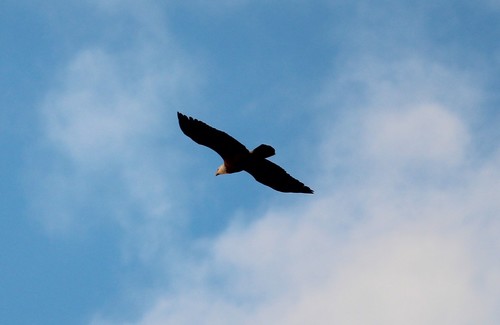
Ashwin Srinivasan, CC BY
What changes at this angle
- The underside of a wing shows as rows of feathers running from the body to the tip.
- Between the wings the body reads as one keel-shaped mass, widest where the wings join it and narrowing to the tail. Find the widest point of the body outline.
- The tail feathers all radiate from one point under the rump; spread wide they make a fan, closed they make a narrow bar behind the body. Trace the two edges of the tail back toward the body.
- The wingtip is made of the primaries, the longest feathers of the wing; where they spread apart, light shows between separate tips. Count the separate tips at the end of each wing.
What goes wrong
- Drawing the underwing as one smooth surface or as a single row of feathers, so the wing reads as a paper fan or a bat wing rather than feathered.
- Drawing the body as wide as it is long with no taper toward the tail, so the bird reads as a ball with wings.
- Drawing the tail as a rectangle attached along the whole width of the body, so the bird reads like a kite with a flat paper tail.
- Drawing the wingtip as one solid shape where the photo shows separate feather tips, so the wing reads as a paddle and the bird looks carved.
Try it
Open the animal body search at the same angle, filtered to birds of prey.